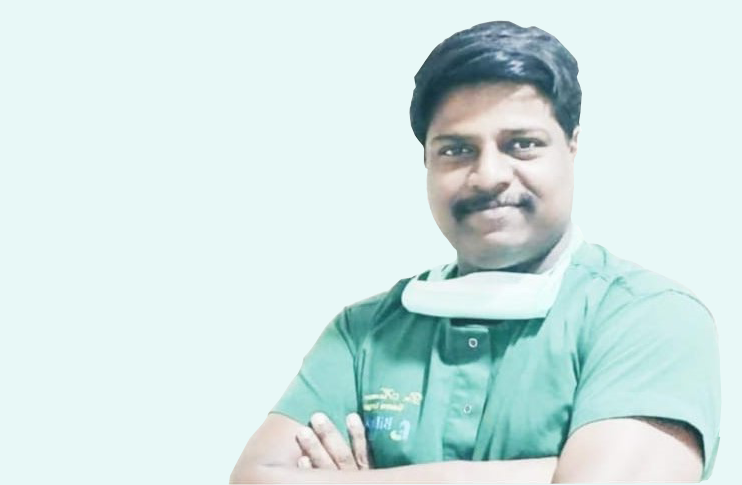
A sports hernia is a painful soft-tissue injury of the groin region common in athletes. Unlike a true hernia, there is no visible bulge — but the underlying abdominal wall or adductor tendons are strained or torn. Get expert treatment for Sports Hernia from Hernia Specialist - Dr Kumar.
A sports hernia (also called athletic pubalgia) is an injury to the soft tissue of the lower abdomen or groin — typically the tendons, ligaments, or muscles that attach to the pubic bone. It is most often seen in athletes who play sports requiring sudden changes of direction, kicking, or twisting.
Despite the name, a sports hernia is not a true hernia — there is no organ or tissue protruding through a defect, and no visible bulge. However, the strain or tear can mimic hernia pain, and if left untreated, it may progress to a real inguinal hernia over time.
Common in football, hockey, soccer, rugby, and running athletes.
Differs from a true inguinal hernia — the abdominal wall is torn but not herniated.
Most common in men aged 20–45 who play high-intensity sports.
Frequently confused with groin strain, adductor tear, or osteitis pubis.
Sports hernias present with chronic groin pain that worsens with activity and improves with rest.
For Athletes
Persistent groin pain during sport — not a strain.
Deep aching or sharp pain in the lower abdomen or groin that develops gradually over weeks.
Pain intensifies with sprinting, kicking, twisting, sit-ups, or sudden direction changes.
Symptoms typically ease with rest but return once the athlete resumes training.
Direct tenderness over the lower abdominal wall or pubic bone on examination.
Unlike a true hernia, there is no visible lump in the groin or scrotum.
Untreated, a sports hernia can progress to a true inguinal hernia requiring surgical repair.
Most sports hernias resolve with conservative care; surgery is reserved for refractory cases.
Initial management includes rest, ice, anti-inflammatory medication, and a structured physiotherapy programme targeting core, hip, and adductor strength.
Corticosteroid or platelet-rich plasma (PRP) injections into the pubic cleft or adductor origin can reduce inflammation and accelerate return to sport.
Laparoscopic or open reinforcement of the abdominal wall with mesh, often combined with adductor release, for cases that do not respond to conservative care.
If left untreated, a sports hernia can become a true hernia or cause chronic pain.
A sports hernia can evolve into a real inguinal hernia if the weakened abdominal wall gives way further over time.
Persistent pain can lead to reduced training, loss of fitness, and even end of athletic career if not addressed.
Chronic strain of the adductor muscles can lead to tendon tears that may require their own surgical repair.
Book an appointment with Dr. Kumar for a comprehensive evaluation and a return-to-sport plan tailored to your sport.
+91 89255 02759
Tap to call
Dr. Kumar specializes in advanced minimally invasive techniques. Laparoscopic and Robotic approaches are preferred for faster recovery, less pain, and tiny scars. Open repair is reserved for select cases.
Minimally Invasive · Keyhole Surgery
For refractory sports hernias not responding to rest and rehab, laparoscopic mesh reinforcement of the posterior inguinal wall is Dr. Kumar's preferred surgical approach. 3 tiny incisions, minimal downtime, and return to sport in 6–12 weeks. Often combined with targeted adductor release.
Latest Technology · 3D Vision
State-of-the-art advanced robotic platform for unmatched precision, 3D visualization, and wristed instruments — particularly useful when bilateral sports hernias or combined inguinal + adductor pathology require fine, layered repair.
Time-tested open technique (mesh repair) reserved for select cases — large, infected, contaminated, or emergency hernias, and patients unsuitable for keyhole surgery.