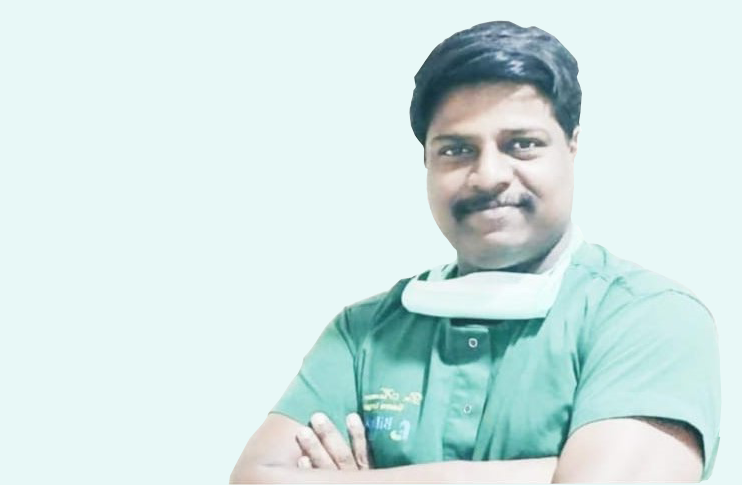
Experience the next generation of hernia repair with advanced robotic systems. Dr.Kumar leading Robotic Hernia Surgeon in Chennai, brings unprecedented 3D visualization, tremor filtration, and wristed precision to your procedure.
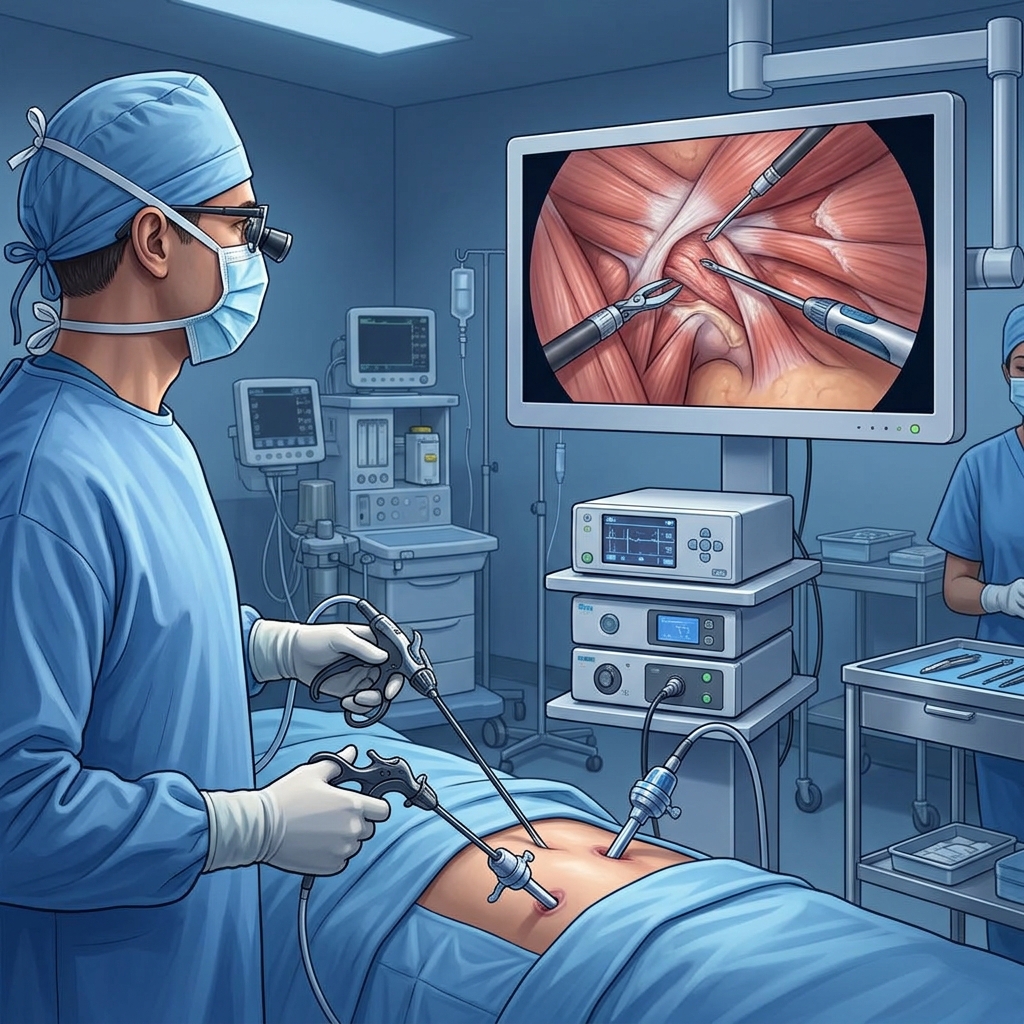
Latest Robotic Systems
3D systems with 720 degrees rotation and 15x magnification
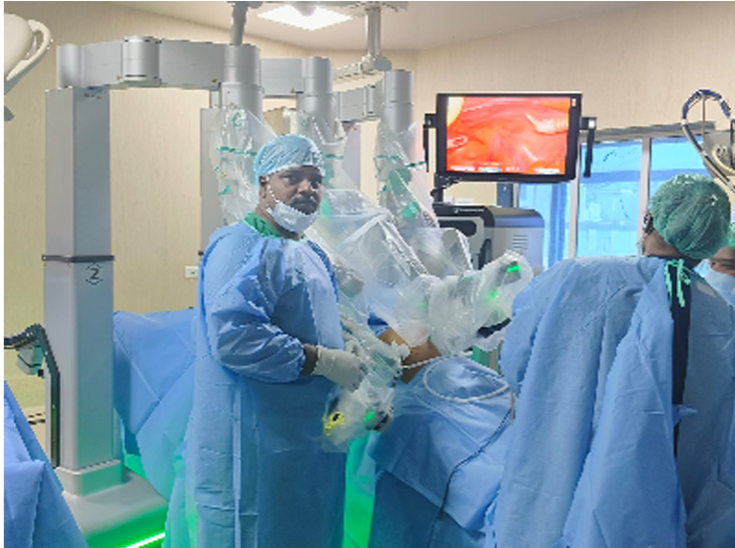
Robotic surgery combines the benefits of minimally invasive keyhole procedures with advanced computer controls that give Dr. Kumar enhanced capabilities for meticulous abdominal reconstruction.
Tremor Filtration
Steady and micron-level motion scaling
15x magnification with true 3D systems. Dr. Kumar can view abdominal structures, nerves, and vessels with microscopic clarity for precise mesh placement.
Robotic wristed instruments feature 720 degrees rotation, exceeding human hand range of motion. This enables highly precise suturing and mesh fixation in narrow anatomical pockets.
Every motion is performed dynamically by Dr. Kumar from the console. The robotic arms act as a direct extension of his hands, eliminating minor tremors and filtering movements.
Small, precise keyhole incisions result in minimal tissue trauma, reduced post-operative pain, shorter hospital stays, and a quicker return to work.
Specially suited for large ventral defects, recurrent hernias, bilateral inguinal hernias, and abdominal wall reconstructions (TAR procedures).
While robotic surgery can be used for most standard hernia repairs, it offers particular clinical advantages in specific, demanding scenarios. Dr. Kumar recommends robotic intervention for:
Repairing hernias on both sides of the groin simultaneously using a single set of small abdominal keyholes.
For patients with previous repairs. Precise wrist controls allow delicate separation of scar tissues and old mesh layers.
Abdominal wall reconstructions requiring complex muscle releases (TAR) and large mesh inserts to restore structural strength.
Stable instrument platforms and strong, motorized controls bypass thick abdominal walls cleanly without losing surgical reach.
"Robotic instrumentation acts as an advanced extension of the surgeon's hands, allowing us to perform reconstructive maneuvers that are difficult with straight laparoscopic tools."
How robotic-assisted repair compares with traditional open surgery and standard laparoscopic procedures.
| Feature | Open Surgery | Laparoscopic |
Gold Standard
Robotic-Assisted
|
|---|---|---|---|
| Incision Size | Single incision (5–10 cm) | 3 keyholes (0.5–1 cm) | 3 keyholes (0.5–1 cm) |
| 3D Visualization | Direct view (No magnification) | Flat screen monitor (2D) | True 3D HD (15x magnification) |
| Surgical Instruments |
Rigid Hand Access
|
Rigid Straight Tools
|
EndoWrist (720° rotation)
|
| Hospital Stay | 1 to 3 nights admission | Same-day discharge (daycare) | Same-day discharge (daycare) |
| Recovery Timeline | 4 to 6 weeks restrictions | 1 to 2 weeks restrictions | 1 to 2 weeks (lower early pain) |
| Recurrent Hernias | Good option | Technically difficult | Excellent clinical option |
With advanced robotic wristed tissue handling, incision margins remain unstretched. This leads to a structured, comfortable post-operative rehabilitation path.
Surgery takes 1–2 hours. After a short 4–6 hour recovery phase in our daycare ward, most patients are discharged home to rest.
Local soreness at port sites is managed with light oral medication. Gentle walking on flat ground is encouraged to promote blood flow.
Desk jobs and driving can be safely resumed. Patients return to moderate walking, swimming, and cycling. Avoid lifting exceeding 10 kg.
The abdominal wall has successfully integrated with the mesh reinforcement. All physical restrictions are lifted, including active gym exercises.
Active Recovery
Guided return to active lifestyle
Recovery is highly individualized based on age, core physical strength, and hernia defect size. Always consult Dr. Kumar's clinical staff prior to resuming heavy core load workouts.
Dr. Kumar utilizes a range of advanced materials science and clinical pathways to tailor the surgical procedure specifically to your body's structural needs.
Mesh selection is based on tissue quality, infection risk, defect location, and physical demands, ensuring custom reinforcement for each patient.
Contoured, anatomically shaped mesh that mimics the natural groin layout for tension-free fixation.
Sutureless mesh using micro-grippers to distribute holding pressure evenly, significantly reducing post-op groin discomfort.
Natural bio-absorbable structures that down-regulate inflammation and support local tissue remodeling.
An evidence-based recovery pathway designed to optimize hydration, limit opioids, and encourage early post-op walking.
No. The robotic system is a computer-assisted tool controlled entirely by Dr. Kumar. Every incision, dissection, and suture is directed in real-time by your surgeon. The system translates hand motions into precise instrument actions, adding tremor filtration and motion scaling.
Schedule a clinical consultation with Dr. Kumar to assess your hernia and determine if a robotic-assisted repair is the ideal pathway for your recovery.
+91 89255 02759
Tap to call