Modern Surgical Protocol

Enhanced Recovery
After Surgery

ERAS protocols represent a paradigm shift in surgical care. By optimizing every phase of your surgical journey, Dr. Kumar helps you recover faster, with less pain and fewer complications.

ERAS Protocol - Fast Recovery After Surgery

What is ERAS?

Enhanced Recovery After Surgery (ERAS) is a evidence-based, multidisciplinary approach that optimizes the surgical experience from pre-operative preparation through post-operative recovery. Developed in Europe in the 1990s, ERAS has revolutionized how patients recover from surgery.

Evidence-Based

Built on scientific research and proven outcomes from thousands of patients worldwide.

Multidisciplinary

Involves surgeons, anesthesiologists, nurses, and physiotherapists working together.

Patient-Centered

Focuses on your experience and actively involves you in your own recovery.

Proven Results

Studies show ERAS reduces complications and shortens hospital stay significantly.

ERAS Protocol Components

Every phase of your surgical journey is optimized for better outcomes.

1

Pre-Operative Preparation

  • Pre-operative counseling and education
  • No prolonged fasting - drink clear fluids until 2 hours before surgery
  • Carbohydrate loading to reduce surgical stress
  • Pre-emptive pain management
2

During Surgery

  • Minimally invasive surgical techniques
  • Goal-directed fluid therapy
  • Optimal anesthesia protocols
  • Prevention of hypothermia
3

Post-Operative Care

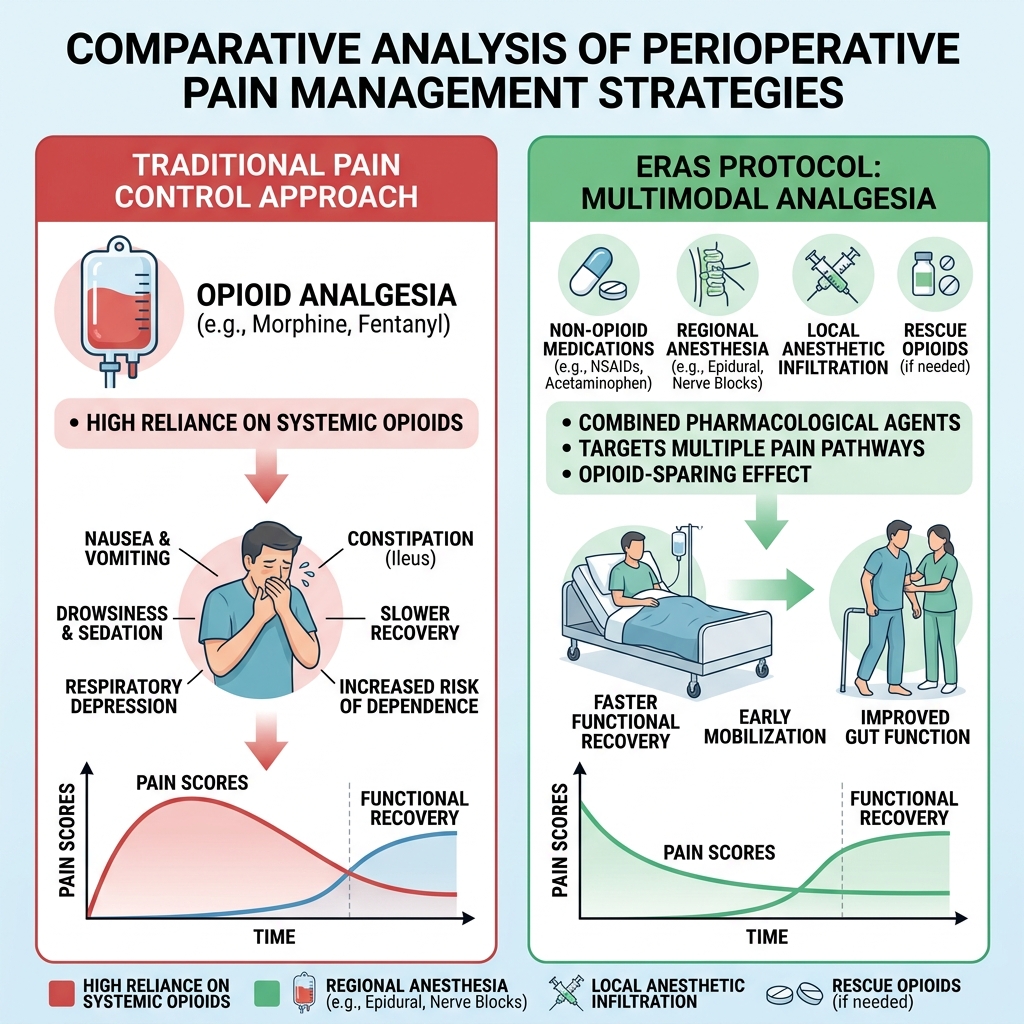
  • Multimodal pain management (reducing opioid reliance)
  • Early mobilization - out of bed within hours
  • Early oral nutrition - regular diet same day
  • Regular audits and continuous improvement

Advanced Pain Management

One of ERAS's greatest achievements is transforming pain management after surgery. By using multimodal approaches, patients experience less pain while avoiding the side effects of strong opioid medications.

Multimodal Analgesia

Combining different pain medications that work through different mechanisms, allowing lower doses of each while providing superior pain relief.

Reduced Opioid Use

Patients on ERAS protocols typically need fewer or no opioid pain medications, avoiding side effects like drowsiness, nausea, and constipation.

Longer-Lasting Relief

Pre-operative and intra-operative pain blocking techniques extend pain relief well beyond the immediate postoperative period.

Traditional vs ERAS Pain Control Comparison

Early Mobilization Benefits

Getting you moving sooner is one of the most important aspects of ERAS protocols.

Within 4-6 Hours

Out of bed and walking with assistance shortly after surgery

Prevents Complications

Reduces risk of blood clots, pneumonia, and ileus

Builds Confidence

Patients feel empowered and in control of recovery

Accelerates Healing

Promotes circulation, bowel function, and overall recovery

Your ERAS Recovery Timeline

AM

Before Surgery (Evening Before)

Clear carbohydrate drink, no solid food after midnight, continue medications as directed.

2h

2 Hours Before Surgery

Clear carbohydrate drink to optimize energy and reduce surgical stress response.

0

Day of Surgery

Minimally invasive procedure, multimodal pain prevention, recovery room mobilization begins.

+1

Post-Operative Day 1

Regular diet, walking in hallway, pain managed with oral medications, shower allowed.

+2

Discharge Day (Usually Day 1-2)

Mobile, comfortable on oral pain medications, wound checked, discharge instructions reviewed, follow-up scheduled.

FAQ

Frequently Asked Questions

While ERAS principles work especially well with minimally invasive surgery, they can be applied to open surgeries as well. The goal is to optimize recovery regardless of surgical approach.

Experience Better Recovery

Faster Recovery with ERAS Protocols

Dr. Kumar implements ERAS protocols to help you get back to your life sooner with less pain and fewer complications.