Anatomical
Body-Matched Shape
Self-Expanding
Perfect Fit Every Time
Revolutionary three-dimensional mesh designed to match your body's anatomy perfectly. Experience superior hernia repair with better fit, less pain, and faster recovery.
Traditional flat mesh has been the standard for decades, but 3D mesh represents a significant advancement in hernia repair technology. Unlike its flat predecessors, 3D mesh is pre-shaped to match the natural contours of the abdominal wall.
This three-dimensional design allows the mesh to conform to your body's anatomy more naturally, reducing the risk of mesh folding, bunching, or displacement that can occur with flat mesh implants.
Safety validated
Long-lasting repair

The three-dimensional design provides significant clinical benefits compared to traditional flat mesh implants.
Pre-shaped to match the natural contours of your abdominal wall, reducing gaps and coverage issues.
3D structure maintains its shape inside the body, minimizing mesh folding that can cause complications.
The 3D shape helps the mesh stay in place without sutures or tackers in many cases.
Better distribution of forces and reduced nerve irritation leads to less post-operative discomfort.
Superior coverage and stability contribute to lower hernia recurrence rates over time.
Minimal fixation requirements mean less tissue trauma and quicker return to normal activities.
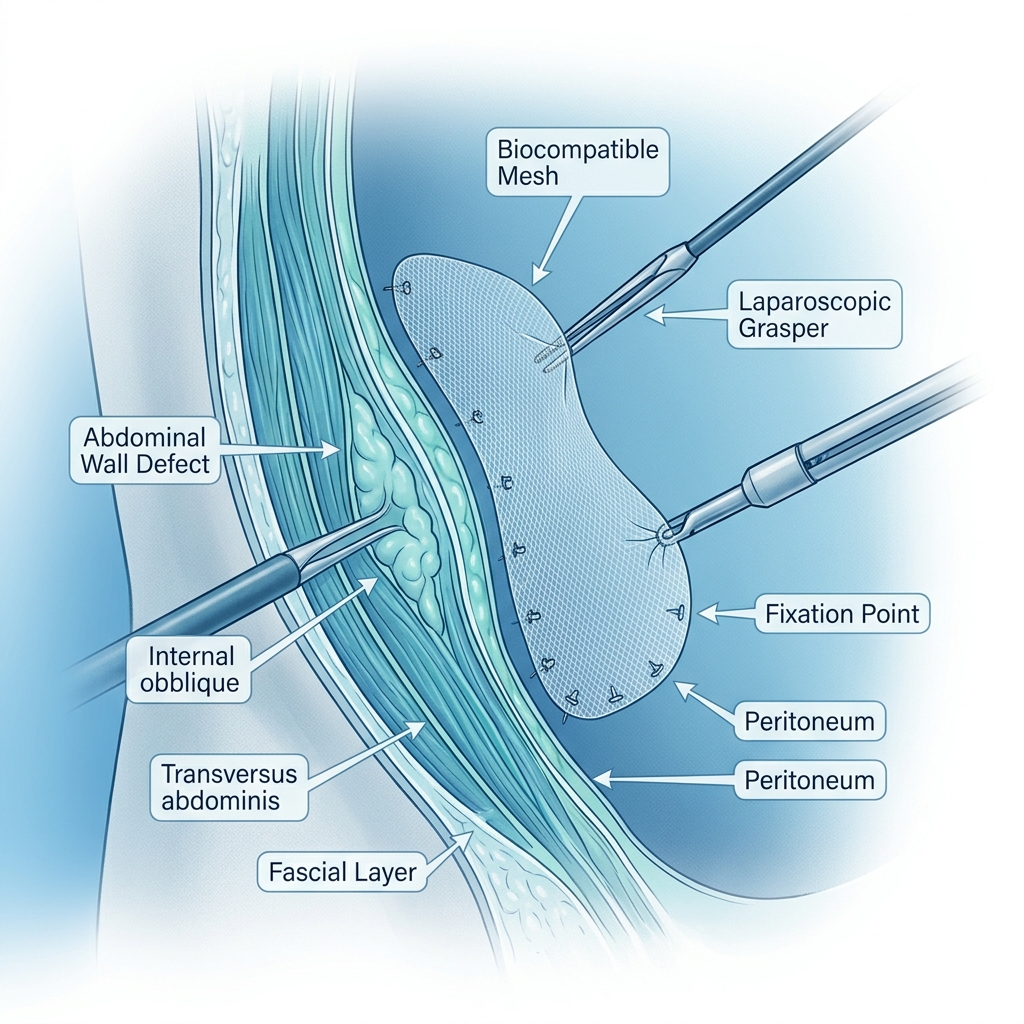
The 3D mesh is designed to sit in the pre-peritoneal space, providing reinforcement from behind the hernia defect. Its three-dimensional shape allows it to conform to the natural contours of your abdominal wall.
Dr. Kumar positions the 3D mesh in the pre-peritoneal space, exactly where it provides maximum support.
The pre-shaped design automatically conforms to your anatomy, reducing the need for extensive shaping during surgery.
The 3D shape provides inherent stability, requiring fewer fixation points and reducing post-operative pain.
Over time, the mesh integrates with your tissue, creating a strong, permanent repair.
Patients receiving 3D mesh often experience a more comfortable and faster recovery.
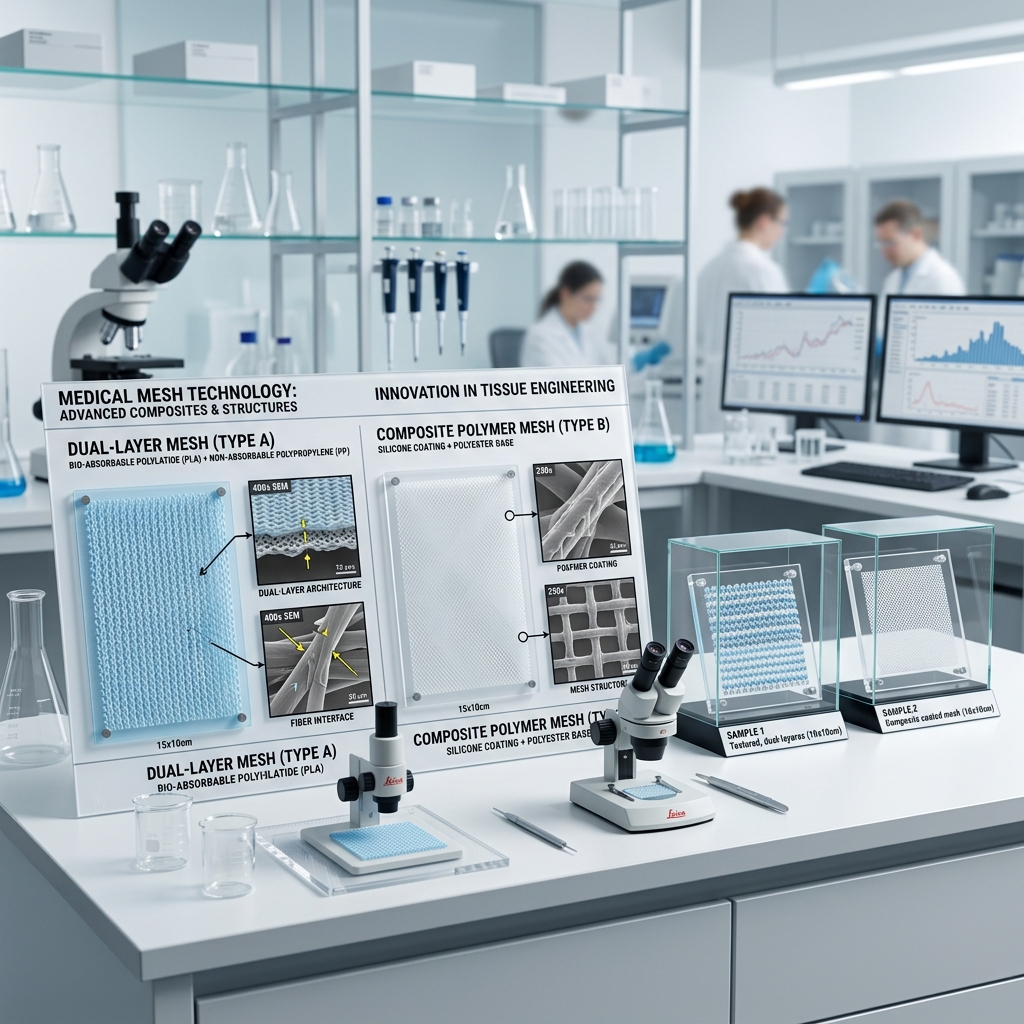
The most common mesh material. Lightweight, strong, and well-studied with decades of clinical data supporting its safety and effectiveness.
Modern meshes use less material while maintaining strength, reducing foreign body sensation and improving comfort during recovery.
Some 3D meshes feature specialized coatings on one side to minimize adhesion to abdominal organs when placed in direct contact.
Yes, 3D mesh has been extensively studied and is FDA-approved for hernia repair. It has been used successfully in hundreds of thousands of procedures worldwide with a strong safety profile.
Dr. Kumar will evaluate your case and recommend the best mesh option for your specific situation.
+91 89255 02759
Tap to call